¢ßATPMÄÁ¼³ÆÃ

Çѱ¹TPM¿¬±¸¼Ò

  ¨Ô Home    £À Sitemap    ¢Î Contact   ¢Á Links    

TPM ÃßÁø¸Å´º¾ó µµ¼­ ¢¸

¤· TPMµµ¼­ Á¾Çվȳ»

[½ÇÀü]ÀåÄ¡»ê¾÷ C-TPM

[½ÇÀü]°¡°ø»ê¾÷ C-TPM

[½ÇÀü]¹ÝµµÃ¼¾÷ C-TPM

[½ÇÀü]°ø±â¾÷Çü C-TPM

[¿µ¹®]C-TPM for Plants

¦Æ¿µ¹® ¾È³» ¹× »ùÇú¸±â

[¿µ¹®]C-TPM for Proc.

¦Æ¿µ¹® ¾È³» ¹× »ùÇú¸±â

[½ÇÀü]TPM±âº»Ã¼°è

[½ÇÀü]°³º°°³¼±¸Å´º¾ó

[½ÇÀü]°èȹº¸Àü[ÅëÇÕÇü]

[½ÇÀü]°èȹº¸Àü[ºÐ¸®Çü]

[½ÇÀü]ǰÁúº¸Àü¸Å´º¾ó

[½ÇÀü]5SÃßÁø¸Å´º¾ó

[½ÇÀü]ÀÚÁÖº¸Àü[ÀåÄ¡Çü]

[½ÇÀü]ÀÚÁÖº¸Àü[°¡°øÇü]

[ÃÖ½Å]TPM½Ç¹«°¡À̵å

[ÃÖ½Å]5S½Ç¹«°¡À̵åºÏ

[ÃÖ½Å]TPMÀü¹®°¡[»ó]

[ÃÖ½Å]TPMÀü¹®°¡[ÇÏ]

[ÃÖ½Å]ÃÑÁ¡°Ë¸Å´º¾ó

[ÃÖ½Å]°³º°°³¼±°¡À̵åºÏ

[ÃÖ½Å]ÀÚÁÖº¸Àü°¡À̵åºÏ

[ÃÖ½Å]°èȹº¸Àü°¡À̵åºÏ

[ÃÖ½Å]RCM°¡À̵åºÏ

[¿µ¹®]TPM°¡À̵åºÏ[1]

[¿µ¹®]TPM°¡À̵åºÏ[2]

¤· TPM Çõ½Å µµ¼­½Åû¼­

Çõ½ÅȰµ¿ ´ÜÇົ µµ¼­


»çÀ̹ö¸ô ÀÌ¿ë¾à°ü

ÀüÀÚ±ÝÀ¶°Å·¡ ±âº»¾à°ü


ÄÁ¼³ÆÃ Á¾Çվȳ»
ÆÐŰÁö Áöµµ
Å׸¶ Áöµµ
Cyber ÄÁ¼³ÆÃ
Áø´Ü·Áöµµ »ó´ã½Åû


»ç³»±³À° Á¾Çվȳ»
»ç³»±³À° »ó´ã½Åû
[ÄÁ¼³ÆÃ»ç·Ê] µ¿¿µ»ó


ATPM Ȱµ¿ °¶·¯¸®


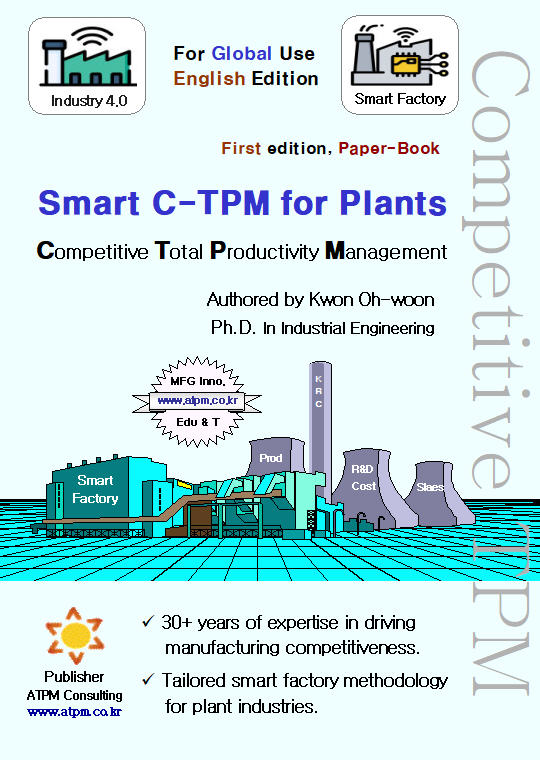
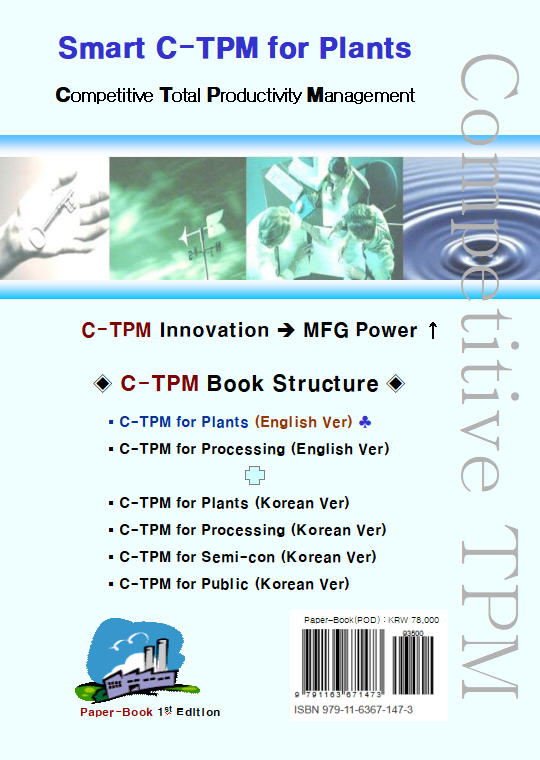
Smart C-TPM for Plants (English version, for Global use) Guide

  Smart C-TPM for Plants (English version, for MFG innovation)


Author

Kwon Oh-woon (Ph.D. in Ind. Engineering /PE/CTC

Press

ATPM Consulting Co., Ltd. (Publishing)

Paper

Book

October 3, 2026: First edition of the print book (Publish on

   Demand / POD) published.

Paper Book (POD) ISBN: 979-11-6367-147-3

E-Book (PDF) ISBN: 979-11-6367-145-9

Price

Paper Book (POD) Price: 78,000 KRW (VAT-exempt)

Spec

566 pages; Paper Book(POD) is produced in B5 size.

Trait

1. Practical Guide to Integrated Productivity Management

    for Enhancing Smart Factory Competitiveness in

    Process Industries

2. Fostering Autonomous Improvement through Innovation

    Methodologies for All Departments and Levels

3. Proposing Manufacturing Innovation Methods Tailored

    for Industry 4.0 Smart Factories

Top

Pick

1. A must-read for driving innovation in overseas

    subsidiaries of Korean companies.

2. A practical guide to enhancing smart factory

    competitiveness in the era of the Fourth Industrial

    Revolution.

3. A roadmap for manufacturing innovation in the smart

    factory era.

Inform.

Purpose

1. The objective is to cultivate the capability to drive C-TPM(Competitiveness

    Total Productive Management) innovation activities within one's assigned

    area by understanding manufacturing innovation methodologies for smart

    factories in the era of the Fourth Industrial Revolution.

2. Participants will learn efficient implementation methodologies that integrate

    traditional TPM activities with smart factory technologies.

Expect

Effect

1. Develop the practical implementation capabilities of the steering secretariat

   and department-level managers.

2. Foster an understanding of key C-TPM functions and the ability to apply

    them in practice.

3. Learn implementation methods tailored to the specific operational

    characteristics of each department through case studies.

4. Benchmark best practices from leading C-TPM companies and apply them

   to the organization's own activities.

Index
&5
Content

Chapter

Chapter-by-Chapter Content Outline

Ch.1

Industrial Revolution Smart Factory Innovation Activities

1.1 Smart Factory Based on the Fourth Industrial Revolution / 2

1.2 Measures to Revitalize Manufacturing Competitiveness in Smart

      Factories / 6

1.3 13 Foundational Technologies for Smart Factories of the 4th      Industrial Revolution / 10

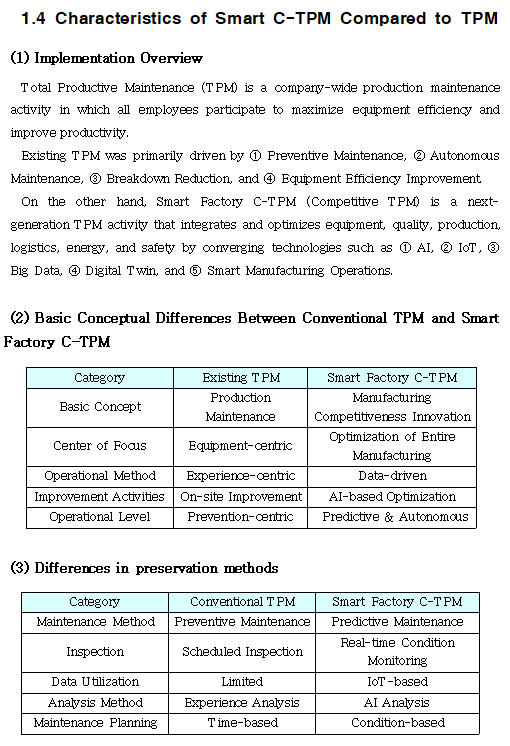
1.4 Characteristics of Smart Factory C-TPM Compared to TPM / 16

1.5 Distinctive Features of Smart Factory Maintenance Management

    / 20

1.6 Characteristics of Maintenance Management for Smart Factory

      Automation Equipment / 26

1.7 Characteristics of Maintenance Management for Smart Factory

      Robot Systems / 30

1.8 Innovation Strategy to Enhance Manufacturing Competitiveness       through Smart Factories / 36

Ch.2

Basic Concepts for Implementing C-TPM Activities

2.1 C-TPM Activities for Smart Factories in Plant Industries / 42

2.2 Applicable Sectors and Characteristics of C-TPM in the Plant

     Industry / 48

2.3 Characteristics of C-TPM in Public Industries and Public      Enterprises / 55

2.4 Enhancing Manufacturing Competitiveness through Smart

     Factories in the Plant Industry / 60

2.5 Comparison of Characteristics: Conventional TPM vs. C-TPM

     / 66

2.6 Evolution from Traditional TPM to C-TPM / 71

2.7 The Necessity of Implementing C-TPM in Smart Factories / 76

2.8 Implementation of C-TPM: Four Key Elements of Manufacturing

     Competitiveness / 81

Ch.3

Activities to Establish the Basic Framework for C-TPM

Implementation

3.1 Phased Implementation Approach for C-TPM / 88

3.2 Declaration of Commitment to C-TPM Implement- ation by Top

     Management / 92

3.3 Training and Campaigns to Foster Awareness of the Need for

     C-TPM / 98

3.4 Establishing Basic Concepts and Framework for C-TPM      Implementation / 104

3.5 C-TPM Basic Policy and Annual Goal Setting /108

3.6 C-TPM Overlapping Small-Group System with Full Participation

     / 112

3.7 C-TPM Implementation Organization and Operat- ional Methods

     / 119

3.8 Formation and Operation of C-TPM Implementat ion      Collaboration Teams / 127

3.9 Participating Levels and Roles in C-TPM Implem- enntation

     / 135

Ch.4

Operation of the C-TPM Diagnostic System for the Plant

Industry

4.1 Differentiating Features of C-TPM Activity Diagno sis / 144

4.2 C-TPM Step-End Diagnosis System for Plant or Process

     Industries / 149

4.3 C-TPM Step-Ending Diagnostic Tools for Plant or Process

     Industries / 160

Ch.5

Implementation of C-TPM Activities in Plant Industries

5.1 Implementation of C-TPM for Manufacturing Competitiveness

     (Short-, Medium-, and Long-term) / 166

5.2 Establishment and Operation of the C-TPM Master Plan / 176

5.3 Operation of the C-TPM Activation Program / 185

Ch.6

Competitiveness Enhancement: C-TPM Activities by

Element

6.1 C-TPM Education and Training / 192

6.2 5S Activities / 279

6.3 MP & Initial Phase Management / 286

6.4 Autonomous Maintenance / 297

6.5 Individual Improvement / 315

6.6 Planned Maintenance / 348

6.7 Quality Maintenance / 372

6.8 Safety, Health, & Environmental Conservation /387

6.9 Enhancing Support Efficiency / 400

6.10 Development VCI (Value Cost Innovation) / 409

6.11 Sales Process Reengineering (SPR) / 432

Ch.7

Measuring the Effectiveness of C-TPM for Competitiveness

Enhancement

7.1 Establishing a C-TPM Effectiveness Measurement Framework

     / 442

7.2 C-TPM Effectiveness Measurement: Calculating Overall

     Equipment Effectiveness (OEE) / 456

7.3 C-TPM Performance Metrics and Best Practices in Plant

     Industries / 466

Ch.8

Operation of C-TPM Status and Activity Boards

8.1 Operation of C-TPM Status Boards and Activity Boards / 472

8.2 Operation of C-TPM Implementation Team Activity Boards / 476

Ch.9

Techniques Related to C-TPM Implementation

9.1 Why-Why Analysis (5-Why Analysis) / 482

9.2 PM Analysis (Physical Interpretation of Phenome- na) / 484

9.3 RCA (Root Cause Analysis) / 488

9.4 FMEA (Failure Mode and Effects Analysis) / 490

9.5 The 7 Basic QC Tools / 491

9.6 New QC 7 Tools / 496

9.7 Creative Thinking Techniques / 500

9.8 TRIZ (Theory of Inventive Problem Solving) / 503

9.9 Selection and Application of Appropriate Problem Solving      Techniques / 510

Ch.10

Smart Factory System Operation Software Case Studies

10.1 ERP (Enterprise Resource Planning) / 516

10.2 SCM (Supply Chain Management) / 520

10.3 CRM (Customer Relationship Management) / 525

10.4 MES (Manufacturing Execution System) / 529

10.5 PDM (Product Data Management) / 534

Ch.11

The Evolved Factory of Smart Factories: C-TPM

11.1 C-TPM Measures for Dark Factories / 540

11.2 C-TPM Measures for Lighthouse Factories / 545

11.3 C-TPM Measures for Autonomous Factories /550

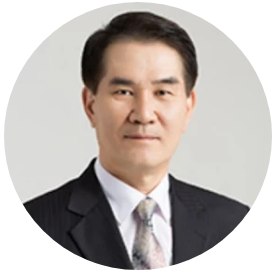
¡Ù Author Profile: Kwon Oh-woon (Ph.D. in IE / PE & CTC) ¡Ù

¡Û Education: Ph.D. in Industrial Engineering (Korea University), M.S. in Industrial

    Engineering (Yonsei University), ROTC Program Completion

¡Û Qualifications: Professional Engineer (Quality Control), Technical Consultant,

    First Class Marine Engineer, Engineer (Quality Management), Engineer (Energy

    Management), Passed 1st & 2nd stages of the Industrial Safety Consultant exam

    (Mechanical Safety field) 13th Exam; Pass on First Attempt / Short-term Study /

    High Scores

¡Û Experience: QA/QC Manager at Daewoo Shipbuilding & Marine Engineering

    (DSME); Senior Specialist/Team Leader at the Korean Standards Association

    (KSA) Consulting Division

¡Û Current: CEO & Principal Consultant at ATPM Consulting Co., Ltd.

    (www.atpm.co.kr), Director of CPEDU Academy (www.cpedua.com), an online

     training institute for industrial professional certifications

¡Û Track Record: 30 years of training and guidance for 60 major organizations

     (including 7 Samsung affiliates, 7 Doosan affiliates, LG/Hyundai affiliates, and

     public enterprises) and 220 SMEs on innovation activities aimed at achieving zero

     accidents, zero breakdowns, and zero defects

¡Û Industry Promotion: Served as a judge for the Presidential Award at the National

    Quality Management Awards (Quality, Production, and TPM categories) hosted by

    the Ministry of Commerce, Industry and Energy; Sole contractor and designer for

    the National Quality Network website (www.q-korea.net) (KSA, 2005)

¡Û Awards: Grand Prize for Figures in Manufacturing Innovation (Korea), 1st Place in

    Korea Consumer Satisfaction Evaluation, Korea Economic Daily President¡¯s Award

    (Achievement Award), Korean Standards Association Chairman¡¯s Award

    (Achievement Award), Daewoo Shipbuilding President¡¯s Award (Achievement

    Award)

¡Û Publications:

    [Latest] Professional Engineer (Quality Management/Factory Management) (6

         volumes total, R14 Edition); Management/Technical Consultant (6 volumes

         total, R4 Edition)

    [Practical] Authored 3 books on Factory Management Professional Engineer

         (Production Systems, etc.; ATPM, 2026 Revised Edition)

    [Practical] Authored 3 books on Quality Management Professional Engineer

         (Quality Management, etc.; ATPM, 2026 Revised Edition)

    [Practical] Authored 3 books on Management Consultant (Production

         Management) (Production Management, etc.; ATPM, 2026 Revised Edition)

    [Practical] Authored 3 books on Technical Consultant (Innovation) (Strength of

         Materials, etc.; ATPM, 2026 Revised Edition)

    [Practical] Authored 6 books on Industrial Safety Consultant (1st Exam: 2026 3rd

         Revised Ed.; 2nd & 3rd Exams: 2026 R2 Edition)

       ¡Ù Past Exam Solutions / Industrial Safety Laws / General Industrial Safety /

          Corporate Diagnosis & Guidance / Mechanical Safety Engineering /

          Practical Interview Prep

    [Latest] Quality Management Engineer (8 volumes total, R6 Edition); Quality

         Management Industrial Engineer (7 volumes, R6 Edition) (Jeongil/

         Seongandang)

    [Practical] Quality Management Engineer: Written Exam (Multiple-choice, 3

         volumes total), Practical Exam (2 volumes total) (ATPM, 2026 Revised

         Edition)

    [Practical] Quality Management Industrial Engineer: Written Exam (Multiple-

         choice, 2 volumes), Practical Exam (2 volumes) (ATPM, 2026 Revised

         Edition)

    Co-authored 6 books on innovation activities (Quality Management

         Implementation, Differentiation Management, e-Biz, etc.)

    Authored 25 books on TPM innovation activities (Latest TPM Comprehensive

         Practice, English Edition Vol. 1 & 2) TPM operations, etc.)

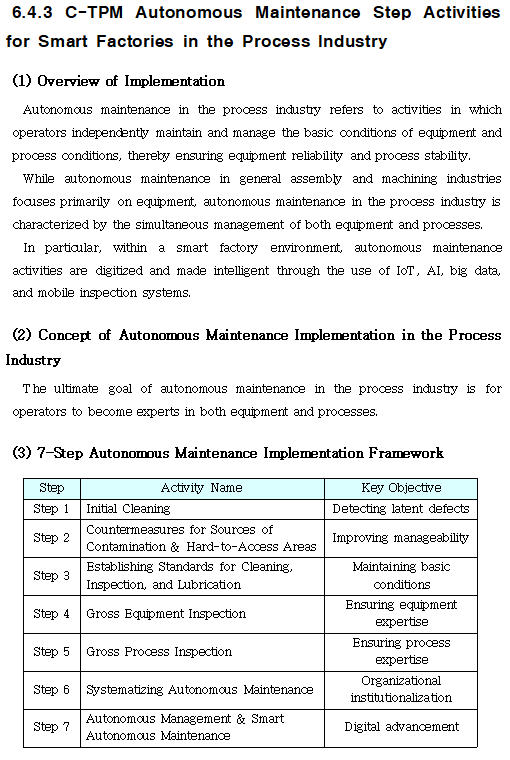
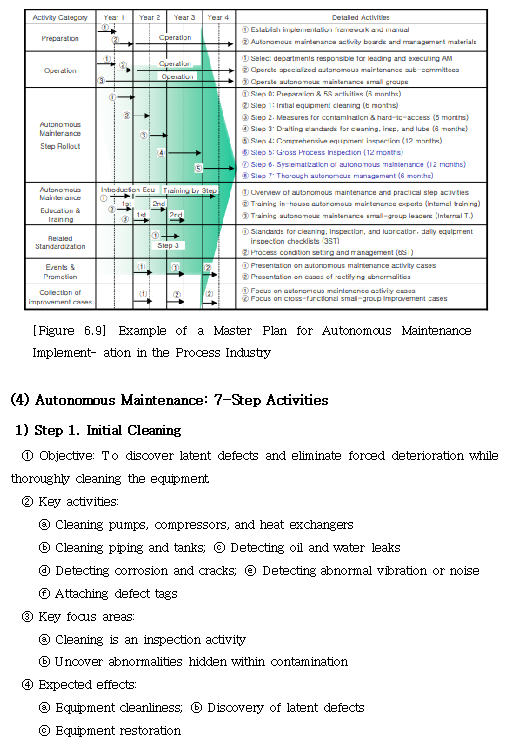
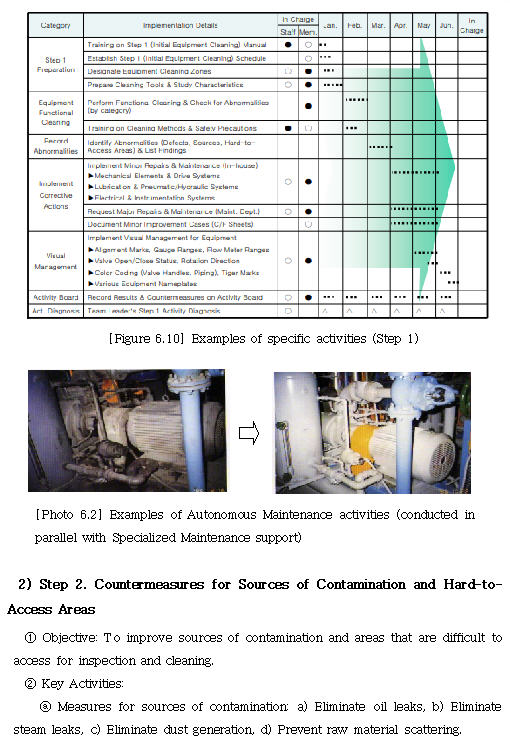
¡Ù Examples of sample cases from the book ¡Ù

 Sample View

 Sample View

 Sample View


Copyright(c) Since 2000 February, All rights reserved. ATPM Consulting Inc., Korea TPM Institute Çѱ¹TPM¿¬±¸¼Ò